Back office · Accounting and operations
Restaurant accounting, with sales already posted
In Lumix POS, what you sell on the floor reaches the books on its own, with its cost. Purchasing, inventory, payroll and the D-104 VAT return work on the same data, for owners and accountants in Costa Rica.
Already using Lumix POS? Sign in
What it does
One system, from the dining room to the balance sheet
For many restaurants the hard part isn't selling, it's knowing what's left. Sales live in the register, purchases in a folder and payroll in a spreadsheet, and at month end someone types it all in again. In Lumix POS all of it is already in one place.
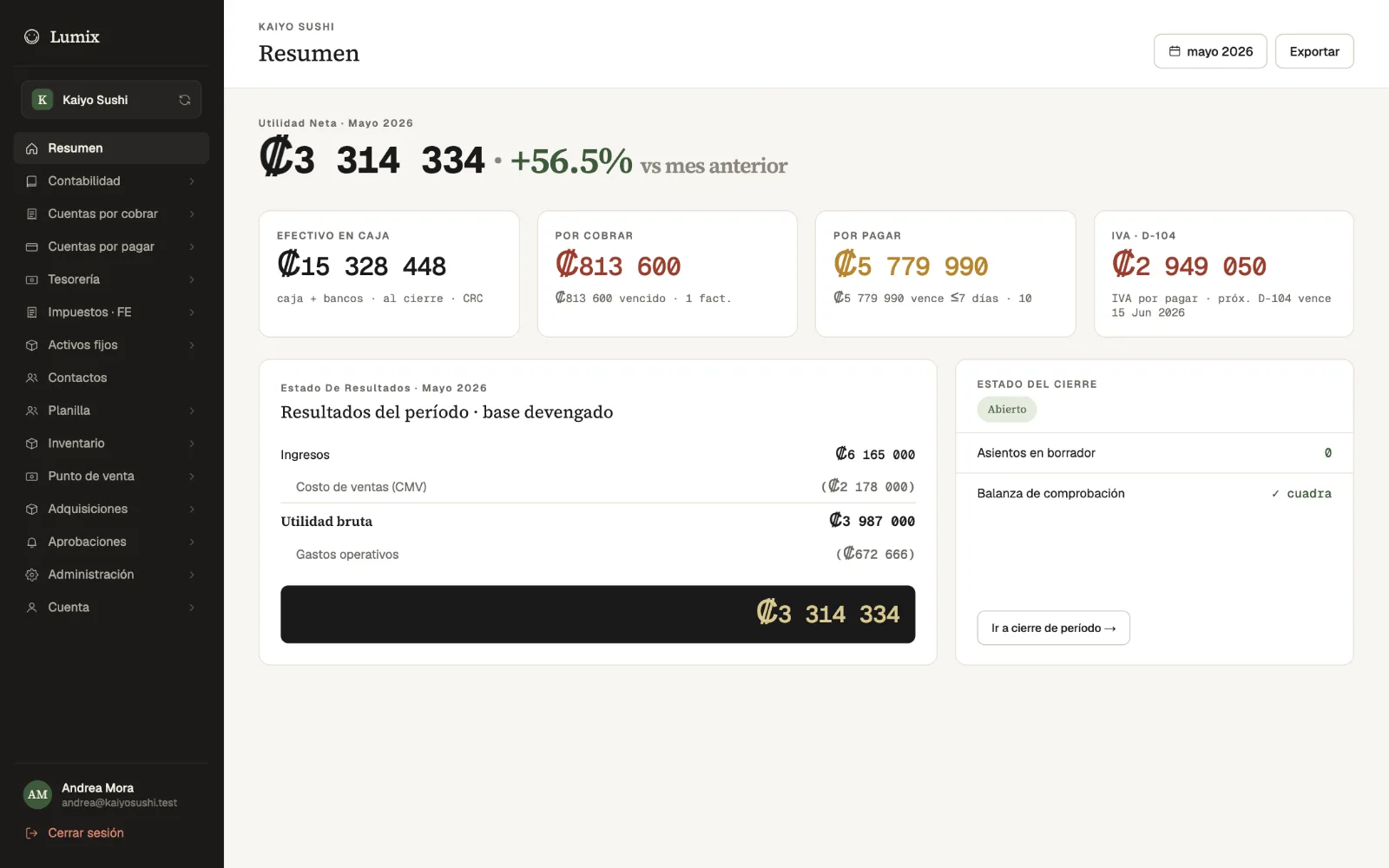
Every sale and every purchase creates its journal entry in the ledger, with the FIFO cost of sales for what left inventory. From there come the financial statements: the income statement against the previous period, the balance sheet, the trial balance, cash flow and results by dimension, for example by cost center.
Purchasing follows the whole path: purchase order, goods receipt and supplier bill, with three-way matching, due dates and VAT credit. Inventory is kept per branch at FIFO value, with lots and expiry dates, stock counts and transfers.
Payroll works out employee and employer CCSS (Costa Rica's social security) and salary tax, with rates and brackets set up with their effective dates, and accrues the aguinaldo (13th month), vacation and severance. Each posted payroll run creates its entry. At month end, the period close follows a checklist and locks the month once everything is done.
- Automatic entries. Sales, FIFO cost of sales, purchases, payments and payroll reach the ledger on their own.
- Financial statements. Results against the previous period, balance sheet, trial balance, cash flow and by dimension.
- Purchasing and payables. Orders, reorder suggestions, receipts and supplier bills with three-way matching.
- Inventory per branch. FIFO value, lots and expiry dates, stock counts, transfers, recipes and production.
- Payroll. Employee and employer CCSS, salary tax and aguinaldo, vacation and severance accruals.
- Taxes and close. The period's VAT for the D-104, bank reconciliation, fixed assets and period close.
Step by step
How the numbers reach the books
You sell on the floor
Each sale closed at the point of sale creates its entry, with the FIFO cost of what was sold.
You buy and receive
The supplier bill is matched to the order and the receipt, and sits in payables with its VAT credit.
You run payroll
The run works out contributions and tax, and posting it creates its entry.
You close the month
With the financial statements, the VAT for the D-104 and the close checklist, the period is locked.
-
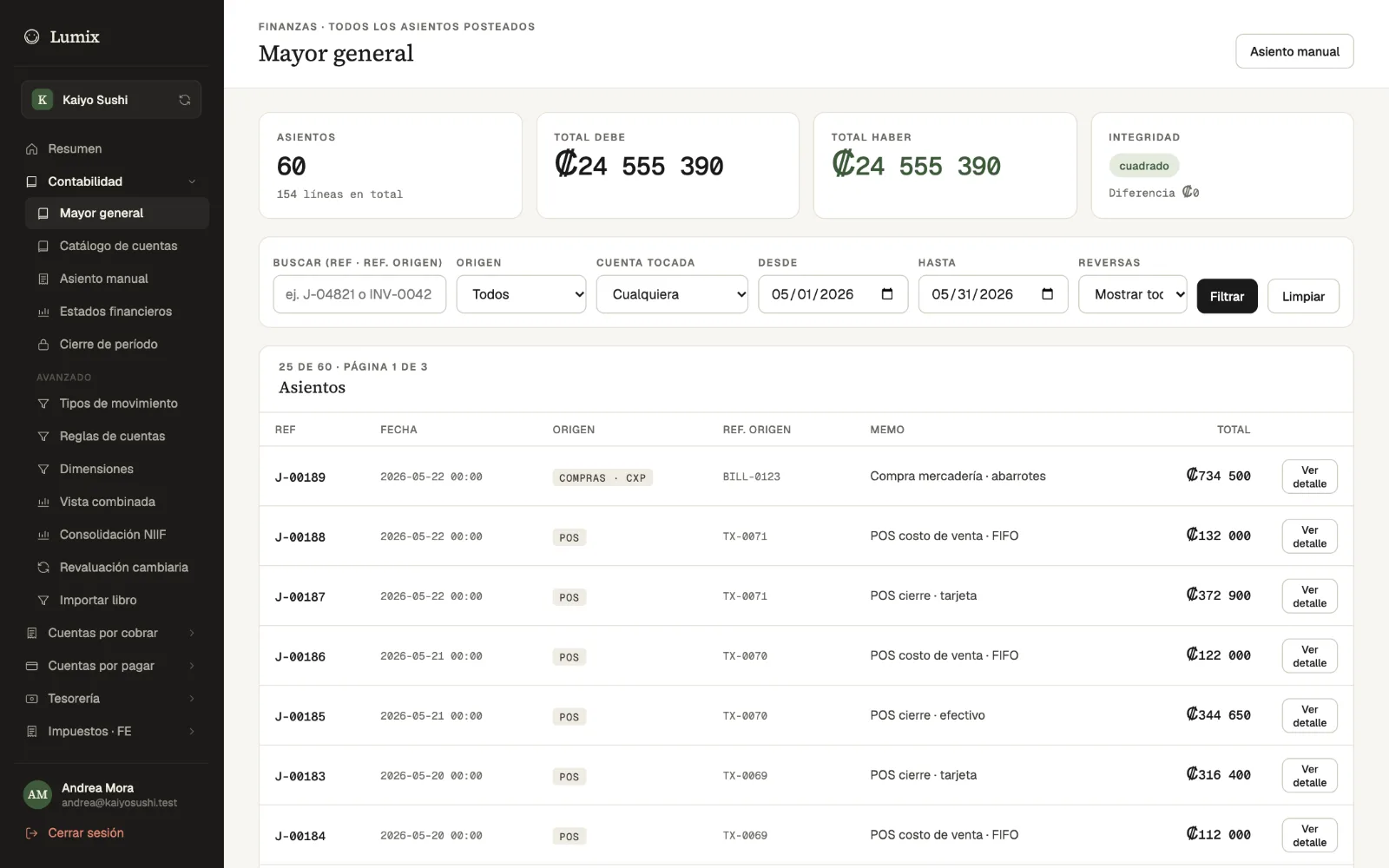
General ledgerEntries posted on their own from the point of sale and purchasing, with debits equal to credits. -
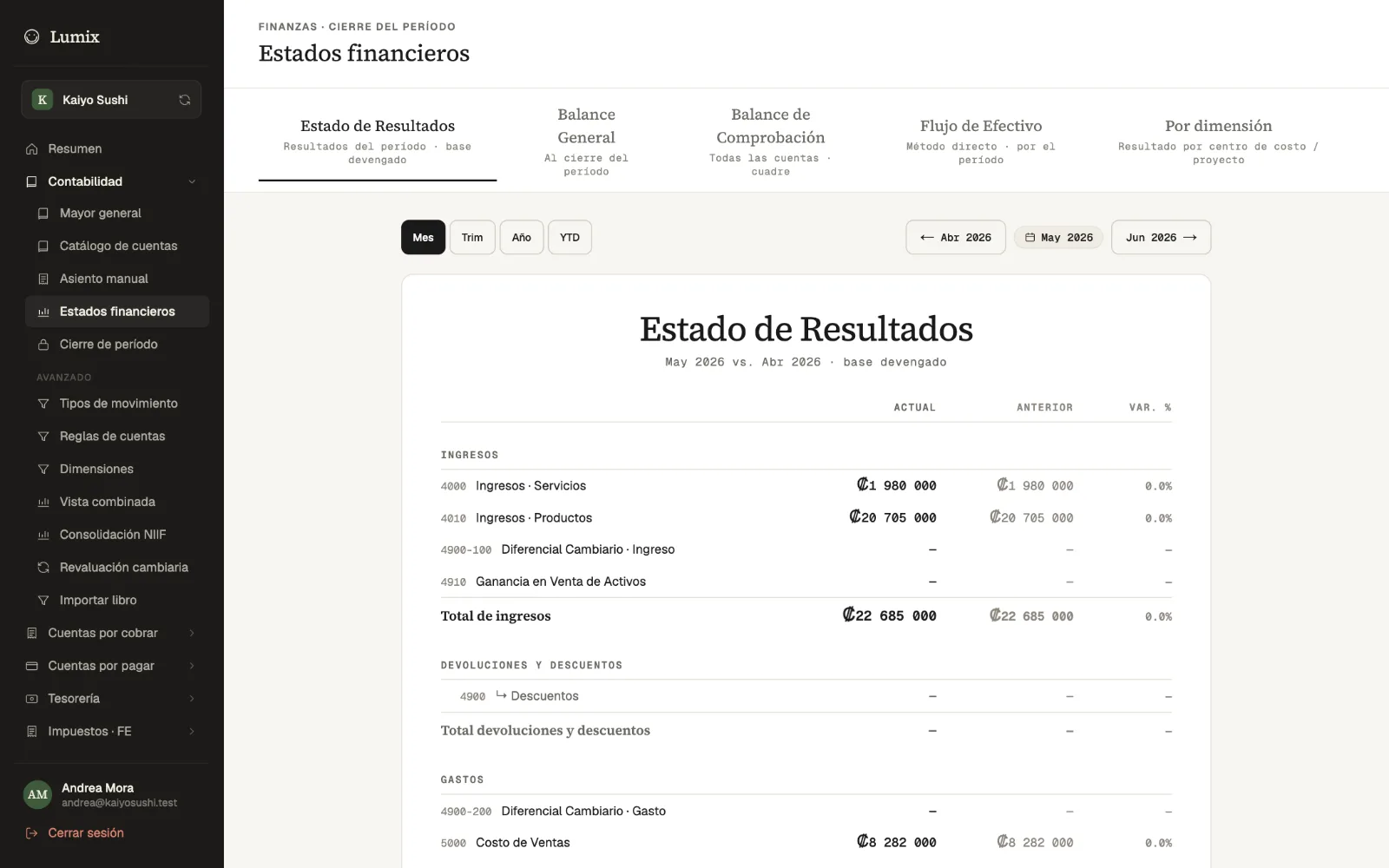
Financial statementsThe month's results against the last one, plus balance sheet, trial balance and cash flow. -
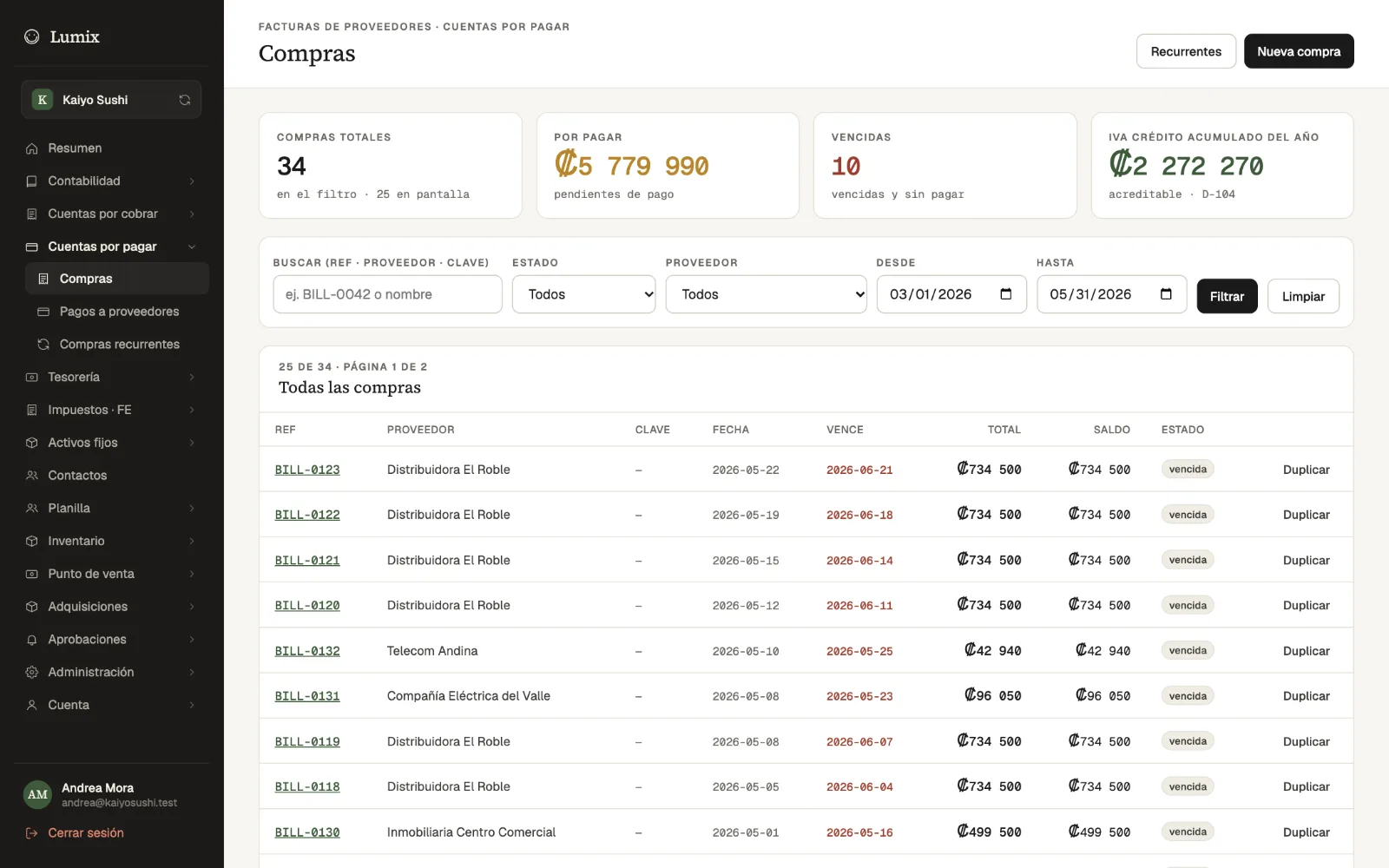
PurchasesSupplier bills with due date, balance and status, and the year's VAT credit. -
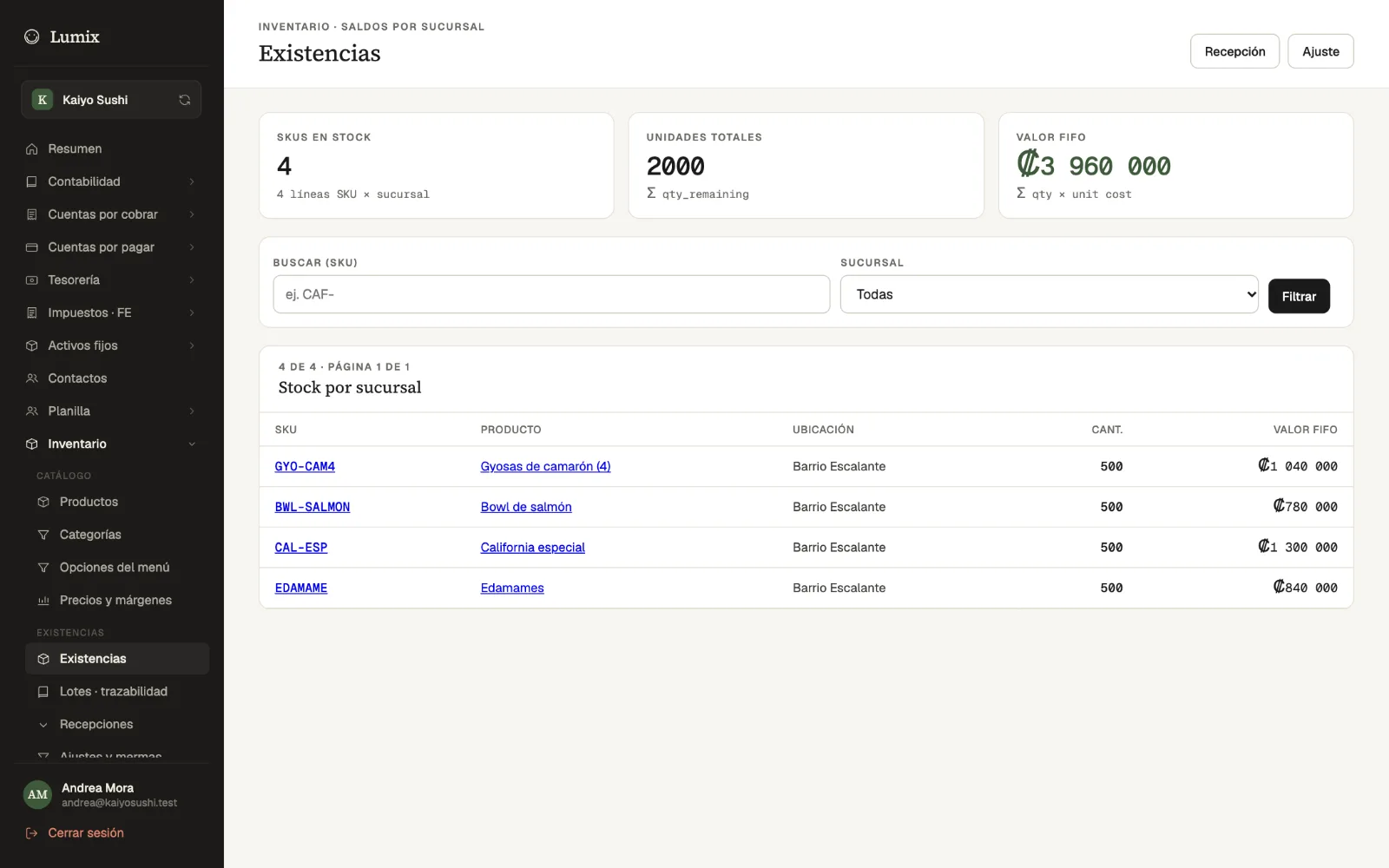
InventoryStock per branch, with the quantity and FIFO value of each product. -
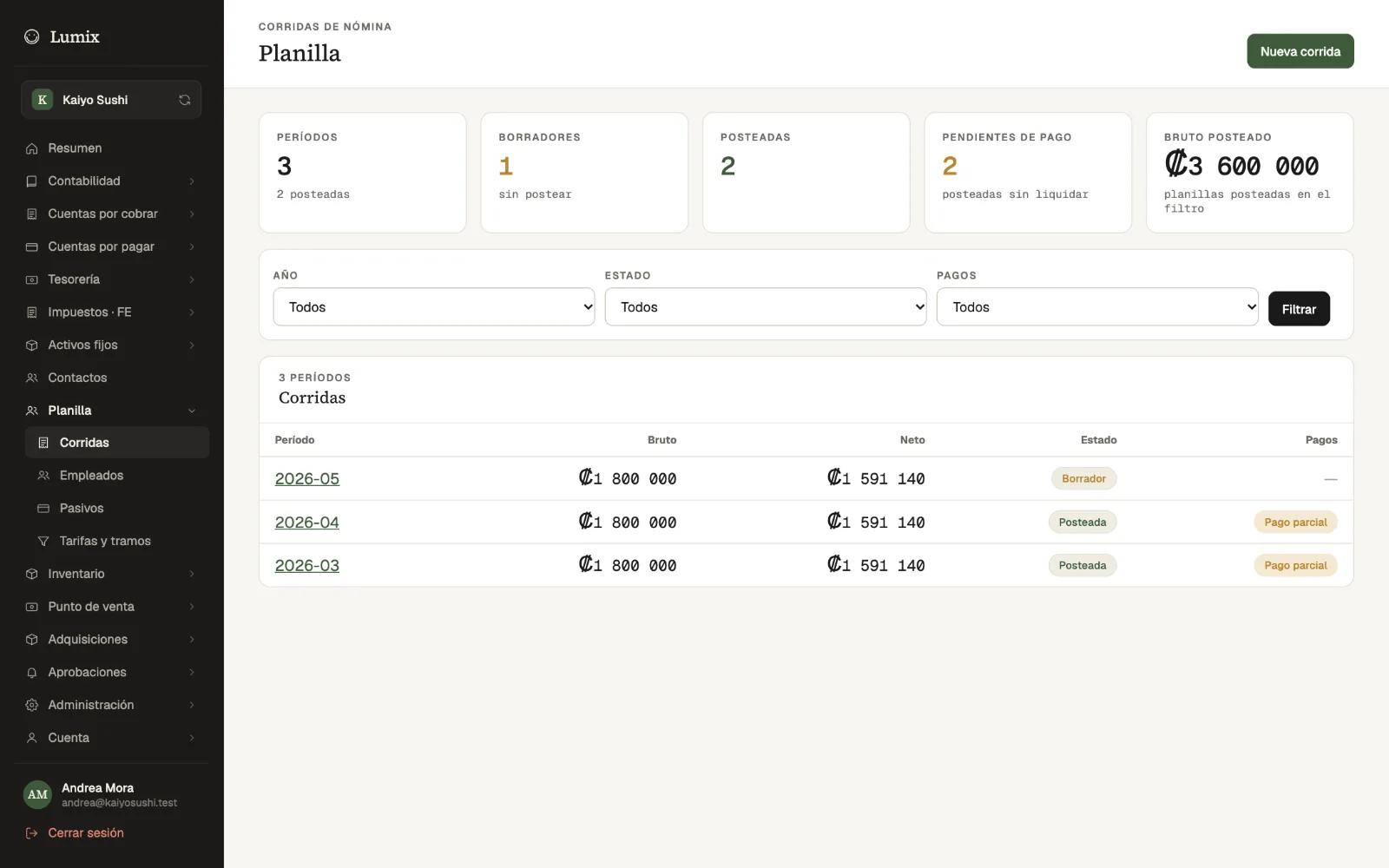
PayrollRuns by month with gross, net, status and payments.
Who it's for
Who it's for
Owners
The summary shows the month's profit, cash, what you are owed, what you owe and the VAT payable.
Accountants
They work on the ledger, statements and D-104 with the dining room's data, without asking for exports.
Managers
Purchasing, receipts, stock counts and transfers between branches in the same system that sells.
Businesses with several branches
Inventory and results per branch, with transfers between them.
Frequently asked questions
What people usually ask
Do I have to enter sales into the accounting?
No. Every sale at the point of sale creates its ledger entry, with its FIFO cost of sales, and the same goes for purchases and payroll.
Which financial statements are included?
Income statement against the previous period, balance sheet, trial balance, cash flow and results by dimension.
Does payroll work out CCSS and salary tax?
Yes. It calculates employee and employer CCSS, salary tax by bracket and accruals such as the aguinaldo. Rates and brackets are set with their effective dates, because they change every year.
How is inventory kept?
Per branch, at FIFO value, with lots and expiry dates, stock counts, adjustments, transfers between branches, recipes and production.
Does it prepare the D-104?
It works out sales per VAT rate, VAT on sales, VAT credit on purchases and the period's balance. The business or its accountant files the return with Hacienda, and the payment is recorded in Lumix POS.
Can my accountant sign in?
Yes. Each person has a role with its permissions, so the accountant sees the books without touching the register.
Also in Lumix POS
The rest of the system, connected
Contact
Keep the books current without retyping
Request a demo and we will show you how a sale on the floor reaches the ledger, the financial statements and the D-104.